

SAE Clearance Explained: How to Choose the Right Tire Chains
Read in 3 minutes

As winter approaches, snowy and icy roads can make driving dangerous. One of the best ways to improve traction in these conditions is with tire chains. But not all vehicles have the same space in the wheel wells — and that’s where SAE clearance ratings come in.
In this guide, we’ll break down the SAE clearance classes, explain what they mean for your vehicle, and show you how to identify whether your tires need chains.
What is SAE Clearance?
The Society of Automotive Engineers (SAE) created a classification system to help drivers choose the right tire chains based on how much space their vehicle allows around the tires. This matters because some vehicles — especially modern cars with tight wheel wells — can’t safely fit larger, bulkier chains.
Minimum Clearance Requirements
Here’s a quick look at the minimum space required for each SAE class:
| SAE Class | Minimum Tread Face Clearance (A) | Minimum Sidewall Clearance (C) | Best For |
|---|---|---|---|
| Class S | 1.46″ / 37 mm | 0.59″ / 15 mm | Passenger cars with restricted clearance |
| Class U | 1.97″ / 50 mm | 0.91″ / 23 mm | SUVs and light trucks |
| Class W | 2.5″ / 63.5 mm | 1.5″ / 38.1 mm | Heavy-duty and commercial vehicles |


Quick Tip: Always check your owner’s manual — some vehicles specifically prohibit certain chain types.
Identifying Which Tires Need Chains
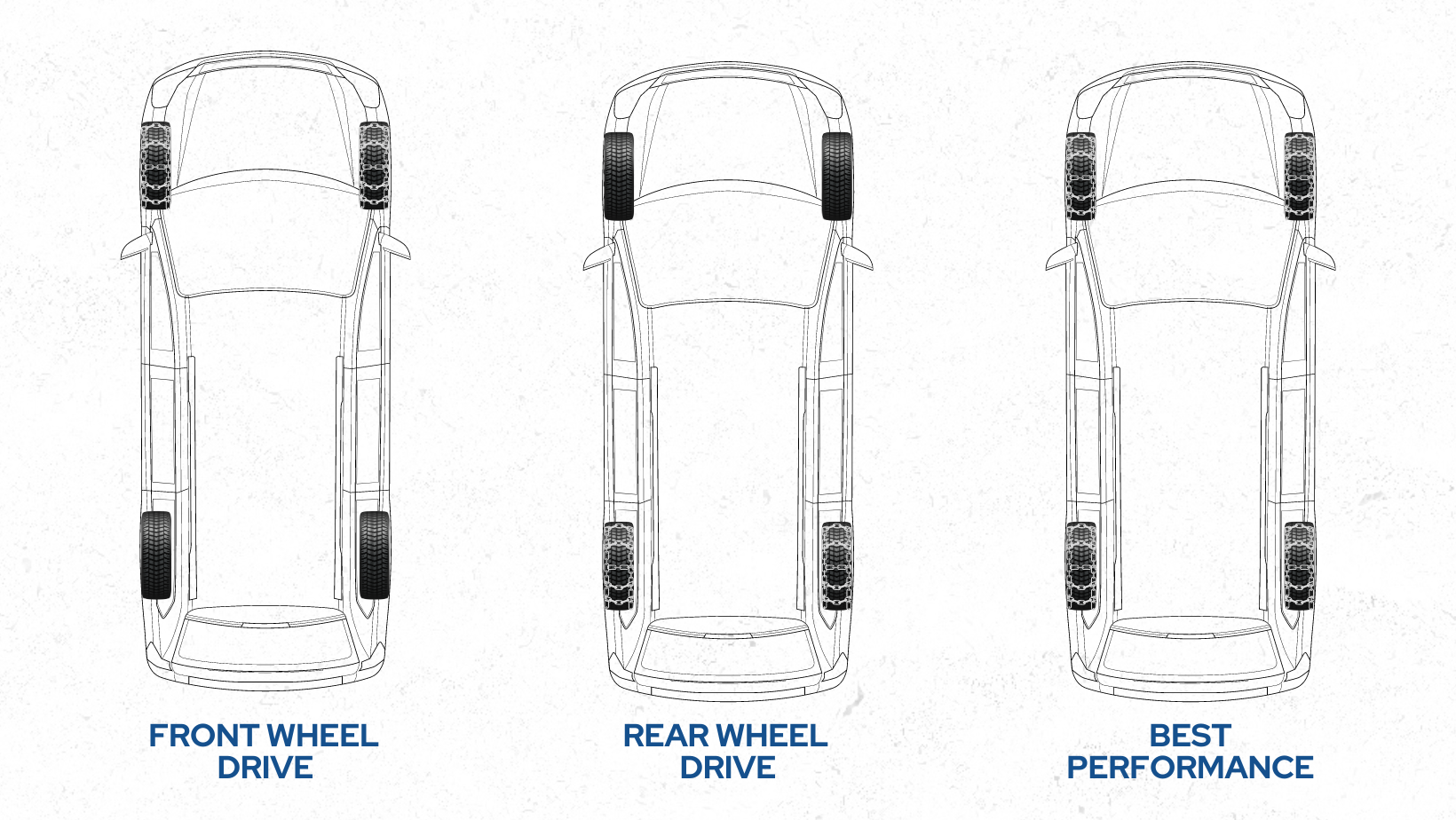
When installing tire chains, always place them on the drive wheels of your vehicle:
- All-Wheel or 4-Wheel Drive: For best performance, install chains on all four tires.
- Front-Wheel Drive: Chains go on the front tires.
- Rear-Wheel Drive: Chains go on the rear tires.
Key Takeaways
- SAE clearance ratings help you match tire chains to your vehicle’s available wheel well space.
- Class S = cars with tight clearance, Class U = SUVs/light trucks, Class W = heavy-duty vehicles.
- Always install chains on your drive wheels (or all four tires for maximum traction).
- Check your vehicle’s manual before purchasing — some vehicles restrict chain use.
FAQs
Do all vehicles need Class S chains?
No. Class S is only required for cars with very limited wheel well clearance. Trucks and SUVs may allow for Class U or W.
Can I put chains on just two tires?
Yes, but for the best performance — especially on AWD or 4WD vehicles — use chains on all four tires.
What happens if I use the wrong class?
Chains that don’t fit properly can damage your vehicle’s fenders, brakes, or suspension. Always match chains to your clearance class.
Passenger & Industrial Chains