

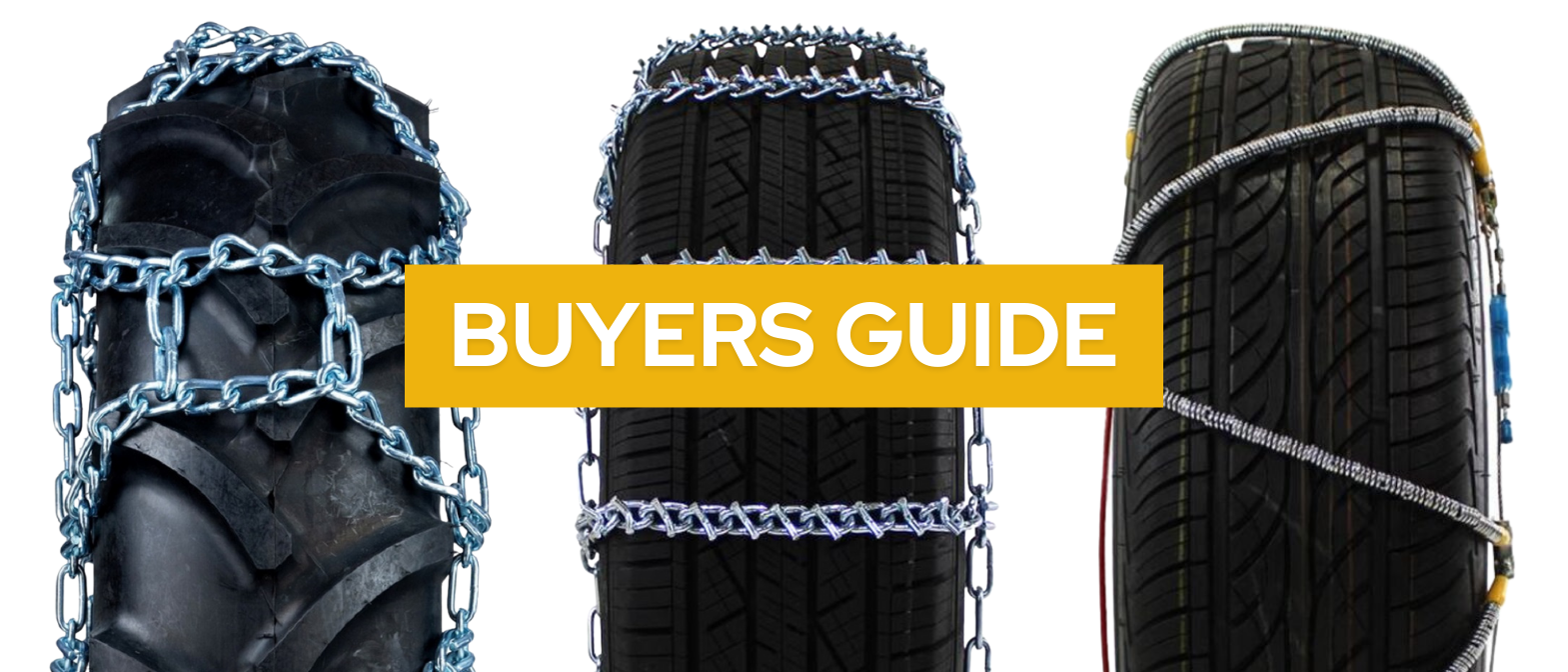
Buying the wrong tire chains is not just a waste of money. It could damage your tires, your fenders, or worse. If you have ever stood in front of dozens of chain options wondering which ones actually fit your vehicle, you are not alone.
This guide walks you through how tire chains really work. Fit, clearance, chain styles, patterns, spacing, and materials. By the end, you will know exactly how to choose chains with confidence, not just this winter, but every winter after.
Fit and Clearance Matter More Than Anything Else
Most chain mistakes happen right here.
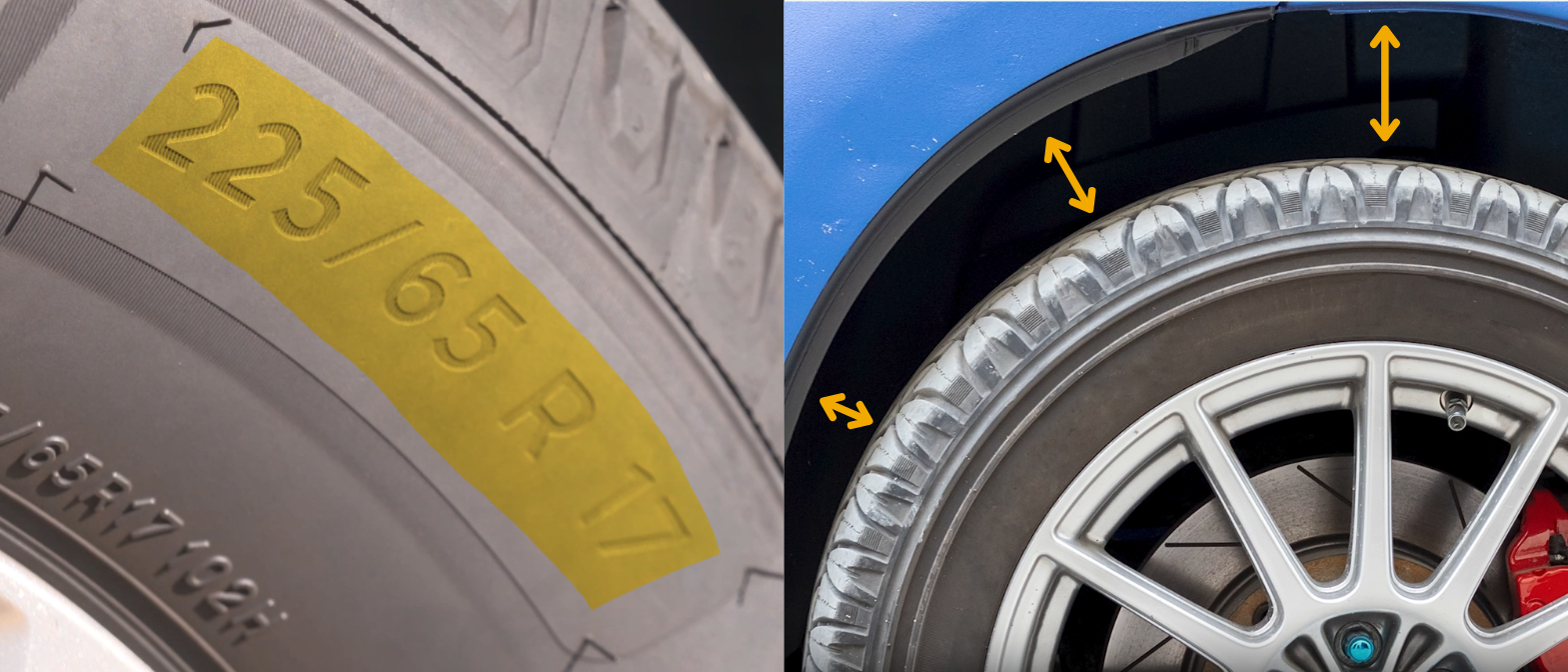
You will see your tire size printed on the sidewall. Something like 265/70R17. That number matters, but it is only half the equation.
P.S. If you’re having issues, check out our guide on finding the right tire chains using your tire size.
The other half is clearance. Even if a chain technically matches your tire size, it may not safely fit inside your wheel well. Tight clearances are common on cars, crossovers, and many SUVs.
That is where Class S compatibility comes in. Class S chains are low-profile designs built specifically for tight clearances. They reduce the risk of rubbing suspension components, brake lines, or fenders.
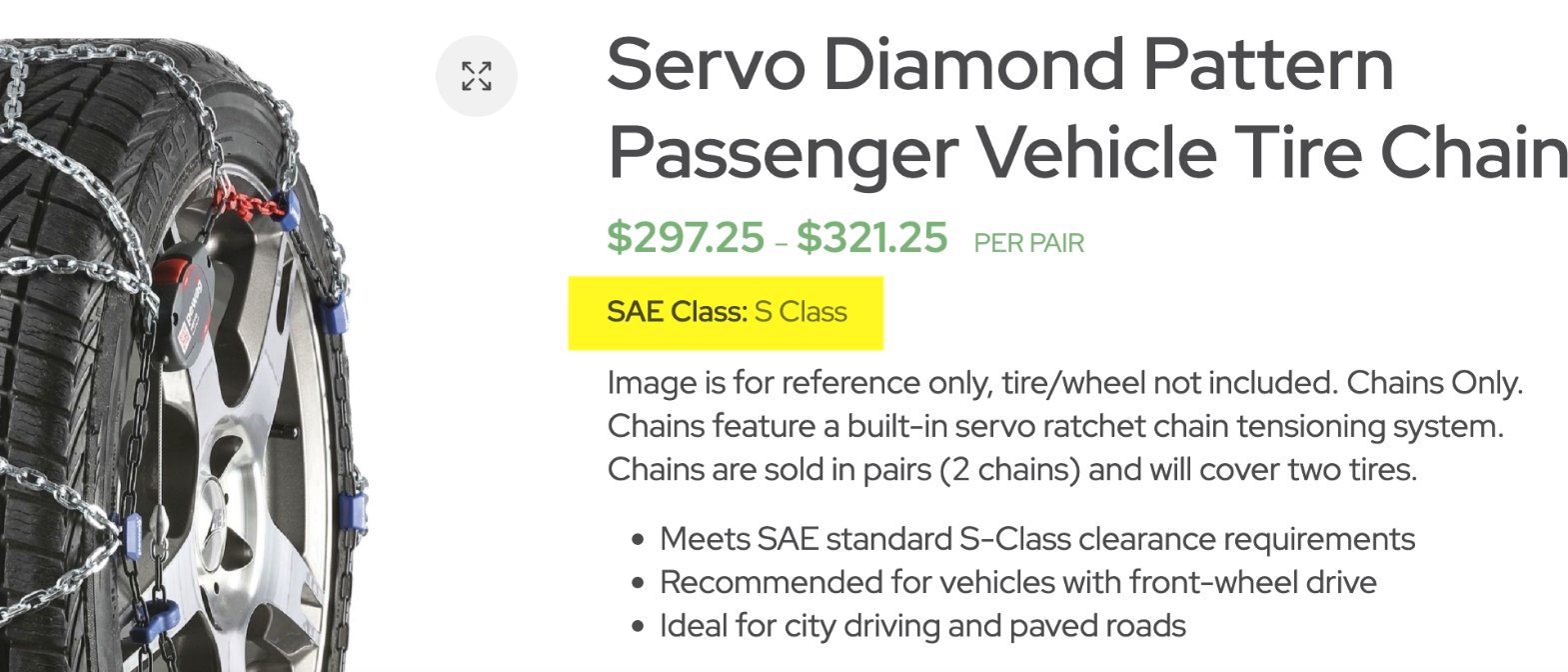
Vehicles with more space, like trucks and off-road rigs, can usually handle thicker and heavier chains. Even then, your owner’s manual always wins.
Quick Takeaway: Always check two things before buying chains
- Your tire size
- Your vehicle’s clearance
For more details on tire chain clearance, check out our full guide here!
Chain Thickness: Tough vs Smooth
Chain thickness affects two things: durability and clearance.
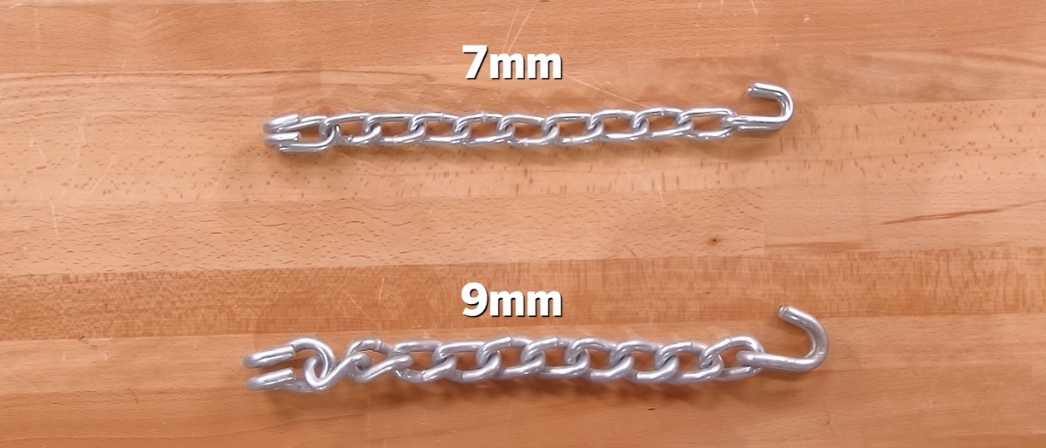
- Thicker links are tougher and bite harder. They are built for trucks, plows, and heavy snow use.
- Thinner links ride smoother and are safer for vehicles with limited space.
There is no universal “better” option here. The right choice depends on how much room you have and how hard you plan to push your chains.
Quick Takeaway: Thick means tough. Thin means smooth.
Chain Construction Types: Chains, Cables, and Socks
Once you understand construction types, shopping gets much easier.
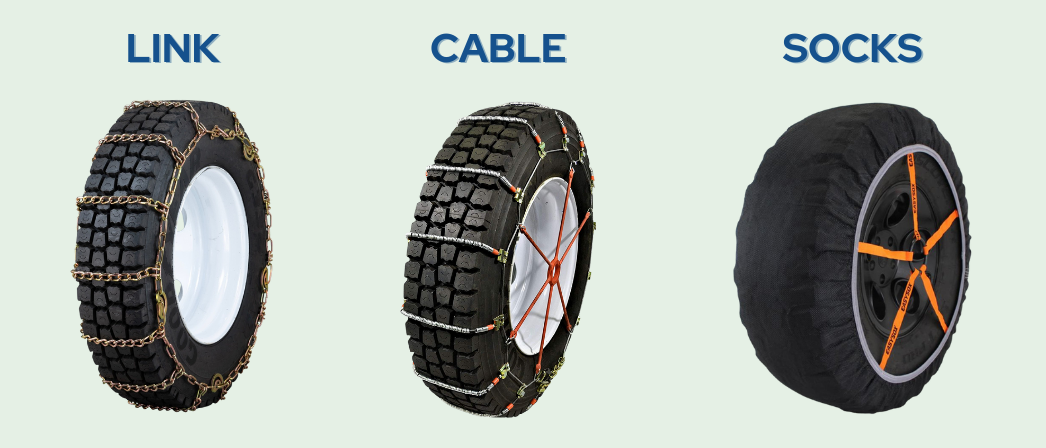
Link Chains
Traditional steel chains. Heavy, loud, and extremely durable. Best for serious snow and ice.
Cable Chains
Twisted steel cables with small rollers. Lighter, smoother, and ideal for low-clearance vehicles.
Tire Socks
High-tensile fabric sleeves that slip on fast. Great for emergencies or short drives, but not a replacement for steel when traction really matters.

Quick Takeaway:
- Chains = power
- Cables = clearance
- Socks = convenience
For more info, check out our pages on construction types here!
Tire Chain Patterns and Why Coverage Matters
The way chains wrap around your tire completely changes how they perform.

Ladder Pattern
Straight bars across the tread. Affordable, easy to install, and strong in forward motion. The trade-off is a rougher ride and less side-to-side grip.
Diamond Pattern
Crisscross coverage across the tread. Smoother traction, better braking, and more control when turning. Heavier and more expensive, but offers better overall performance.
H-Pattern
Maximum coverage with added connecting bars. Excellent for deep-tread or extreme conditions. Not ideal for equipment that steers side to side.
Quick Takeaway: More tire coverage = more traction. The trade-off is cost, weight, and install time.
For more details, check out our pages on each tire pattern here!
Chain Spacing: 2-Link vs 4-Link
Spacing refers to how many side-chain links sit between each cross chain.
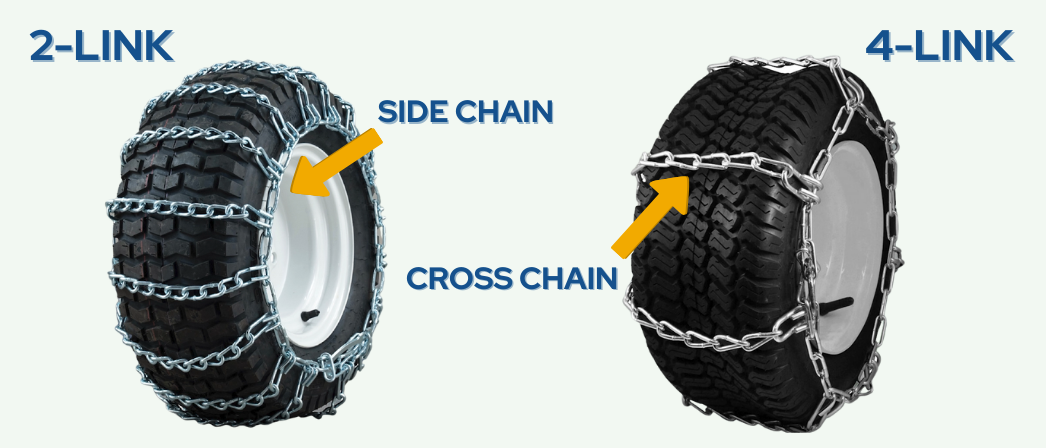
- 2-link spacing puts cross chains closer together. Smoother ride, more consistent traction, and better control.
- 4-link spacing spaces them farther apart. Lighter, easier to install, and more affordable.
You will usually see 2-link spacing on heavy-duty or premium chains, and 4-link on standard passenger setups.
Quick Takeaway: Closer spacing equals more control.
For more details, check out our pages on each link style here!
Link Styles: How Aggressive Do You Need to Be?
The shape of the link changes how it grips.
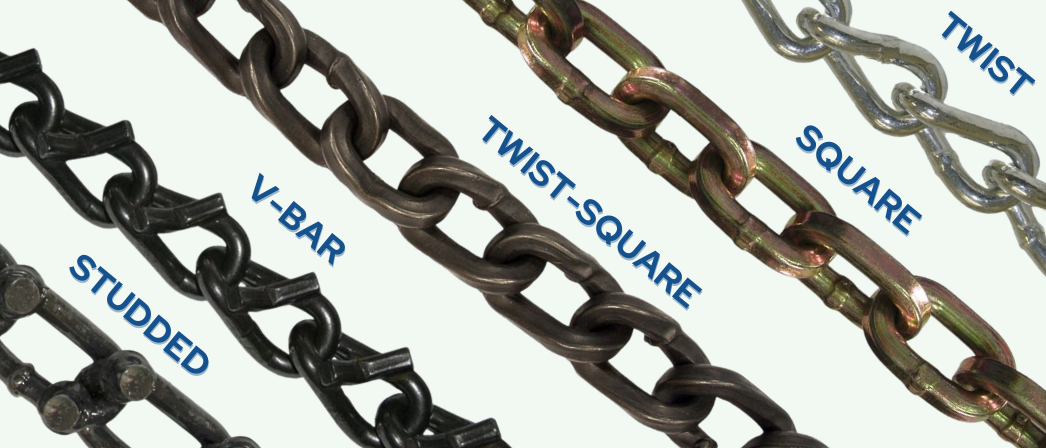
- Twist links ride smoother but clear mud less effectively.
- Square links dig in harder and self-clean better.
- Twisted square combines strong bite with smoother contact.
- V-bars are extremely aggressive and meant for ice and steep terrain, not pavement.
- Studded are even more aggressive and typically found on off-road vehicles like ATVs.
- Ring-style chains are typically for agricultural and heavy equipment.
Quick Takeaway: Twist equals smooth. Square equals strong. V-bar equals extreme.
For more details, check out our pages on each link style here!
Cam vs Non-Cam Chains
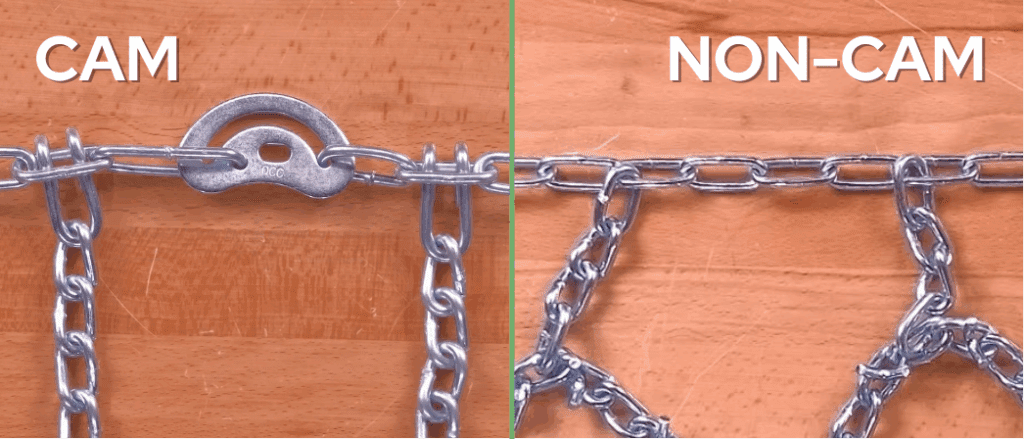
Cam locks are built-in tensioners that make installation faster and cleaner, especially in cold conditions.
Non-cam chains rely on separate rubber or spring tensioners. They take a little more work but are often more durable for off-road use where debris could damage cam locks.
Both styles work well when properly tensioned.
Summary: Cams are faster. Non-cams are tougher. Tensioners are always required.
For more info, check out our full side by side comparison video!
Tensioners Are Not Optional
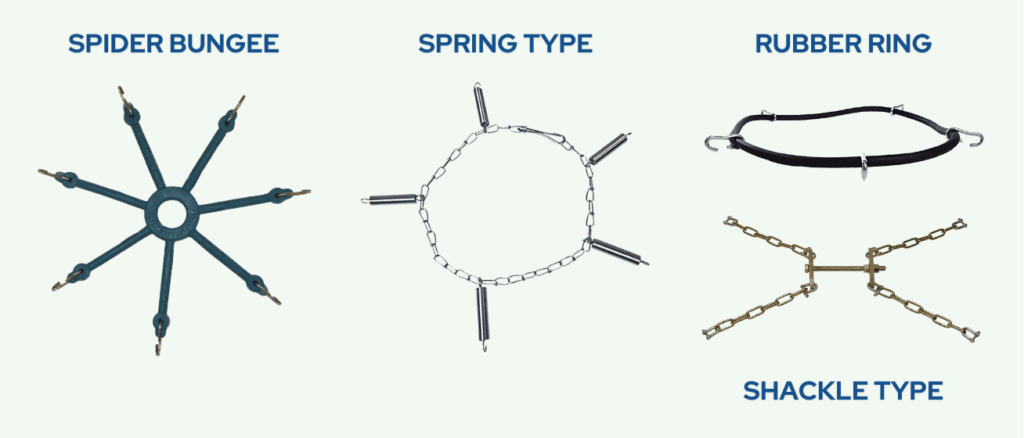
Loose chains can slap fenders, damage suspension parts, or come off completely.
Tensioners keep everything tight and balanced. If your chains do not include them, add a set.
Some chains actually have “tensioner included” marked on their product page. Make sure to keep an eye out for that!
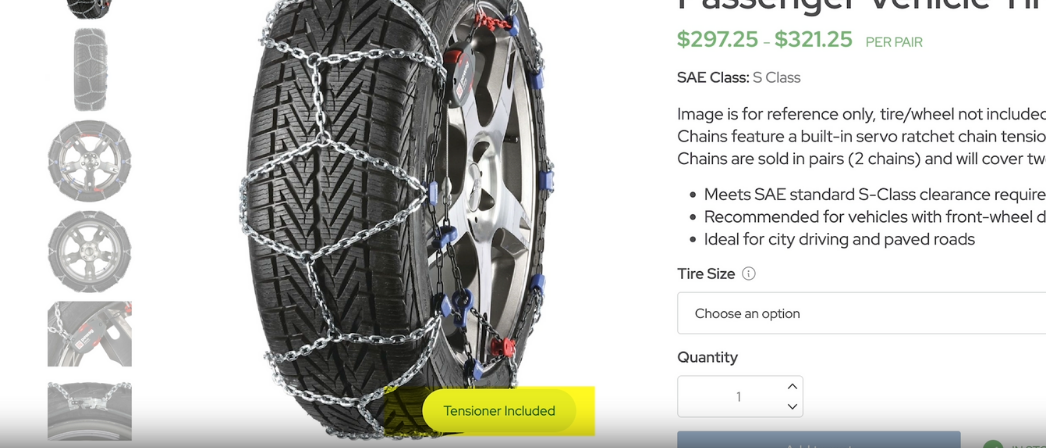
Quick Takeaway: A tensioner is cheap insurance for a set of chains. Always recommended.
For more info, check out our full guide on the various tire chain tensioners!
Materials and Finish
Not all steel is the same.
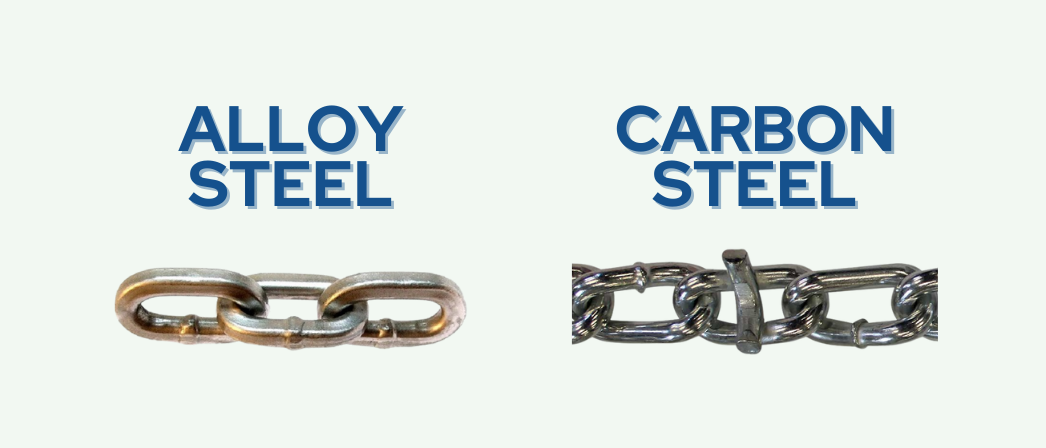
- Alloy steel is stronger, more corrosion-resistant, and built for frequent use.
- Carbon steel is more affordable and perfectly fine for occasional winter driving.
Quick Takeaway: If you chain up often, go alloy. If it is once or twice a year, carbon steel will do the job.
The One Rule That Makes Chain Shopping Simple
Everything you just read comes back to one thing:
Know your clearance first.
Once you understand how much space your vehicle has, thickness, pattern, spacing, and even material choices fall into place naturally.
Measure first. Choose smart. Drive safe.
Passenger & Industrial Chains